

Mindset
The difference maker.

The distinguishing identifier of a spiritual leader is a kingdom service mindset.

WWJD. Remember the bracelets with those letters? What Would Jules Jesus Do?
I never wore one because I thought it was the wrong question. I thought the letters should be WIJD. What Is Jesus Doing? After all, he is alive and at work in the world today. As one of his servants whom he calls a friend, I want to recognize his work and join him in his activity in the world.
Then I had lunch with Len Sweet who suggested the letters should be WIJG. Where Is Jesus Going? He pointed out that in the scriptures, Jesus is always on the move, and his followers were trying to catch up with him. Our responsibility is to follow – go where he is going.
I liked the subtle but significant twist. I need to become so acquainted with him I can discern where he is going and join him on the adventure. That will preach.
Enter Dr. Dallas Willard with his challenging question to me. “If you are a plumber, how would Jesus act if Jesus were a plumber today?” Substitute your vocation/role/ identity for plumber. Whatever your profession, what would Jesus do if he were in your shoes? Bingo.
In my mind, it all fit together like a jigsaw puzzle. Discerning what he is doing and joining him, going where he is going, and living as Jesus would live if he were in my shoes became a trifecta for understanding spiritual leadership. I walk in his steps (following). He walks in my shoes (discipleship). But saying it and living it are two different things.
After five decades of observing, studying, teaching, and practicing leadership, I have concluded that
the distinguishing factor in practicing spiritual leadership is in the mindset of the person.
Carol Dweck introduced us to fixed and growth mindset paradigms. (Mindset: The New Psychology of Success. New York: Ballantine Books. 2006) A fixed mindset is static, resistant to change and innovative ideas, and desires for things to remain as they are. A growth mindset is progressive, open to change and new ideas, and desires to explore new ways of operating.
Authors, professors, and consultants have created multiple mindset models that govern how we approach life and fulfill our responsibilities. Mindsets of successful people, rich/poor mindsets, healthy mindsets, change mindsets, leadership mindsets, an empowerment mindset, just to name a few.
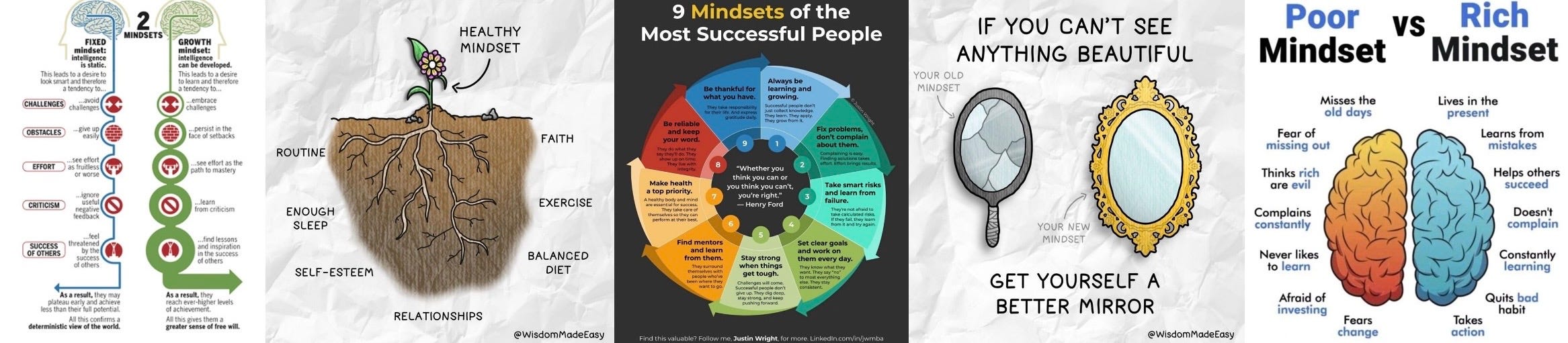
When reviewing the multiple mindsets, they all describe either a positive or negative mindset or a helpful or harmful mindset.
Simply said, a mindset is a way of thinking, an attitude, a frame of reference, an approach to living as we learn, follow, and lead.

Our mindset determines how we respond to situations that come our way.
At the core of a mindset is a way of thinking that influences our attitudes, emotions, and actions. The pattern of thinking we each have established over time and the thoughts we have, become a mindset that governs our approach to life. (More on Thinking next week.)
The mindset of Jesus
When walking in His steps (following/belonging) and allowing Him to walk in our shoes (discipleship/apprenticeship), our mindset should reflect the mindset of Jesus.
“In your relationships with one another, have the same mindset as Christ Jesus:” Philippians 2:5
The word Paul used in his letter to the People of God in Phillipi was φρονέω (phroneō) – a way of thinking, an attitude, a disposition, an orientation, or common outlook. Most interesting is what he did not use. He did not use νοῦς (nous) – referring to a person’s intellect or intelligence), or διάνοια (dianoia) – referring to reasoning, understanding, and thoughts). He used φρονεῖτε (phroneite) – a command that everyone is to adopt this attitude and approach to life and leading.
Phroneō is more than thinking, reasoning, or having a great intellect. Mindset captures the meaning best. Having the mind of Jesus is not philosophical reasoning, knowing all the doctrines, or having a superb intellect producing great scholarship. Phroneō is a mindset - an attitude, a way of life.
Multiple mindsets coming together
The instruction to have the mindset of Jesus was written to a church in a Greek city-state turned Roman Colony whose charter participants were an elite businesswoman named Lydia, a demonic fortune teller who was rescued from human trafficking, and a prison warden.
Talk about multiple mindsets all coming together in a group of people. Greek thinking. Roman living. Influential female business leader. Girl rescued from trafficking. Prison warden. Each has their own way of thinking, way to respond, and approach to life.
No wonder Paul uses the various grammatical forms of phroneō ten times in the letter. He was asking a group of people with multiple mindsets to come together and have a similar mindset. The distinguishing factor of bringing these people together was a mindset like Jesus.
Paul then describes the mindset of Jesus with a song. The message of the song was one of sacrifice, service, and humility. Or stated in the negative - Jesus was not concerned about personal advancement, personal gain, or personal recognition.
Walking in His steps means living a life of sacrifice, service, and humility.
Walking in His steps means foregoing personal advancement, gain, or recognition.
If Paul was writing to us today asking us to have Jesus walk in our shoes, he might select the song Gotta Serve Somebody by American songwriter, singer, artist, philosopher, theologian, Bob Dylan.
But you’re gonna have to serve somebody
Yes indeed, you’re gonna have to serve somebody
Well, it may be the Devil or it may be the Lord
But you’re gonna have to serve somebody
In Jesus own words, his mindset was a kingdom mindset. His mission, his message, and his desire was the kingdom of God. His activity was to do what the Father was doing. (Luke 4:43; Matthew 4:17; Matthew 6:10; John 5:19) (You can read more about that here.)
The mindset of a person who walks in His steps (following) and allows Him to walk in their shoes (discipleship) is one of kingdom service rather than personal advancement, gain, or recognition.
A kingdom service mindset is:
a way of viewing life and the world through God’s perspective, aligning our thoughts, actions, and desires with God’s ways and purpose rather than purely human desires or cultural norms.
an interactive relationship with the king, leading to a way of life and influence that seeks the rule of God by joining him in his activity in the world.
a relationship with the king that transforms our minds to think like the king and influence those around us to take part with the king in his activity in the world.
Our primary desire echos the prayer the king taught his First Followers when he said, “…your kingdom come, your will be done, on earth as it is in heaven.” (Matthew 6:10)
What is Jesus doing? Where is Jesus going? What kind of ___ your vocation___ would Jesus be if he were a ___your vocation___ today?
How you answer these questions places you on the journey of providing leadership service with a kingdom service mindset.
Think about it
What is Jesus doing? Where is Jesus going? What kind of ___ your vocation___ would Jesus be if he were a ___your vocation___ today?
How does the distinguishing mark of a kingdom service mindset challenge the way our culture and the church defines successful leadership?
What practical habits help a person develop the mindset of Jesus rather than merely learning more about Jesus?
What challenges and opportunities does a person have in today’s culture when they are working to unite multiple mindsets to develop a common kingdom service mindset?
What are some visible differences between a leader motivated by kingdom service and one motivated primarily by personal advancement, gain, and recognition?
Getting personal
When I make important decisions, am I primarily asking what I want to accomplish, or am I seeking to discern what Jesus is already doing and how I can join Him?
If Jesus were living my life today—in my family, workplace, church, or community—what would He do differently than I am currently doing?
What attitudes, ambitions, or ways of thinking in my life are shaped more by culture and personal advancement, gain, and recognition than by a kingdom service mindset?
In what recent situation did I demonstrate the mindset of Jesus through humility, sacrifice, or service? In what situation did I fail to reflect His mindset?
As I consider the command to have the same mindset as Christ, what is a specific change in my thinking, priorities, or daily habits that I should be making?
If you have not yet done so, please be sure to subscribe. It is free. No paywall.
If you liked what you read, tell a friend.
If you really liked it, share the entire publication.